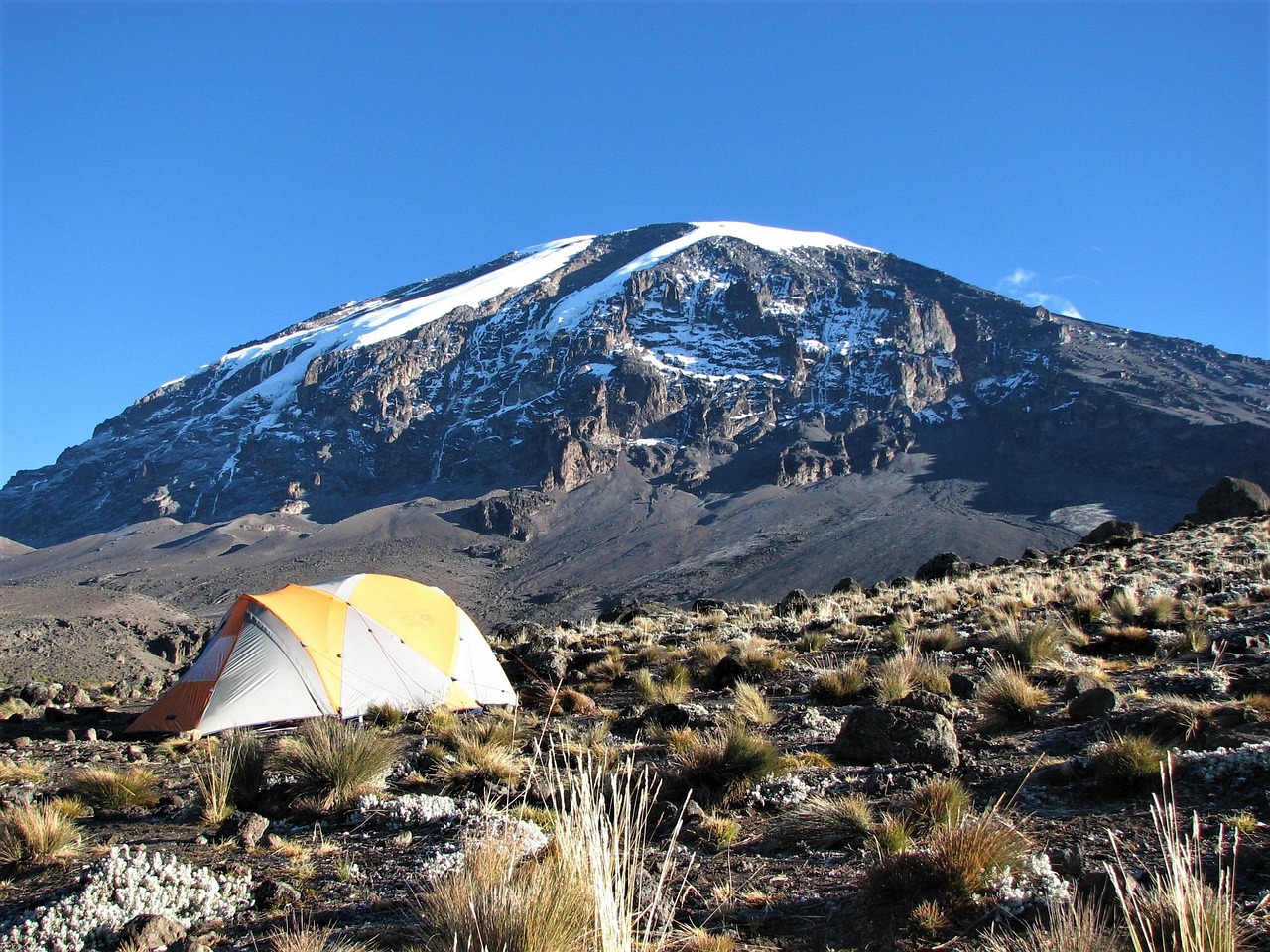
Climb Mount Kilimanjaro through the quieter 6 Days Rongai Route with professional guides, full mountain support, camping accommodation, meals, safety equipment, and park fees.
The 6 Days Rongai Route Kilimanjaro Package is a scenic and less crowded trekking itinerary for reaching Uhuru Peak, the highest point in Africa at 5,895 meters. Rongai approaches Mount Kilimanjaro from the remote northern side near the Tanzania–Kenya border and provides a different mountain experience from the more frequently used southern routes. The route begins near Rongai Gate and passes through cultivated farmland, montane forest, heathland, moorland, alpine desert, and the Arctic summit zone. Climbers experience destinations such as Simba Camp, Second Cave, Kikelewa Camp, Mawenzi Tarn, Kibo Hut, Gilman’s Point, and Uhuru Peak. The northern side of Kilimanjaro is generally drier than the southern slopes, making Rongai a popular option during wetter months. The route also provides beautiful views of Mawenzi Peak, Kibo, the Kenyan plains, and the remote northern wilderness. The six-day Rongai itinerary includes an important acclimatization stage near Mawenzi Tarn before climbers cross the Saddle toward Kibo Hut. The summit attempt normally begins around midnight and follows the Marangu summit trail through Gilman’s Point before continuing around the crater rim to Uhuru Peak. After the summit, climbers descend through Kibo Hut and Horombo Hut before completing the trek at Marangu Gate on the southeastern side of the mountain. With African Trek & Travel, the 6 Days Rongai Route package includes professional mountain guides, assistant guides, porters, a mountain cook, park fees, camping and hut fees, rescue fees, mountain tents, meals, drinking water, airport transfers, hotel accommodation before and after the climb, emergency oxygen, health monitoring, and transportation to Rongai Gate and from Marangu Gate.

Climb Mount Kilimanjaro from the quieter northern side and experience remote wilderness, Mawenzi Tarn, the Saddle, Kibo Hut, Gilman’s Point, and Uhuru Peak.
The 6 Days Rongai Route Kilimanjaro Package is a scenic and less crowded itinerary that approaches Mount Kilimanjaro from the remote northern side near the Tanzania–Kenya border.
The route is known for its quiet trails, open landscapes, views of the Kenyan plains, beautiful Mawenzi scenery, and generally drier conditions compared with the southern slopes.
The trek begins near Rongai Gate and passes through farmland, montane forest, heathland, moorland, and alpine desert before reaching Kibo Hut.
Climbers stay at Simba Camp, Second Cave, Kikelewa Camp, Mawenzi Tarn, and Kibo Hut before attempting the summit through Gilman’s Point.
After reaching Uhuru Peak, the descent follows the Marangu Route through Kibo Hut, Horombo Hut, and Marangu Gate.
After breakfast at your hotel, meet the African Trek & Travel mountain team and drive through Moshi toward the northern side of Mount Kilimanjaro.
The drive passes through villages, farmland, and rural landscapes before reaching Rongai Gate near the Tanzania–Kenya border.
At the gate, your guide completes national park registration while the porters organize food, camping equipment, and climbers’ duffel bags.
The trek begins through cultivated farmland and gradually enters montane forest. The northern forest is generally drier and more open than the rainforest found on the southern side.
You may see birds, monkeys, and other small wildlife while walking toward Simba Camp.
After arriving at camp, the mountain team prepares dinner and sleeping tents while the guide provides a briefing for the following day.
After breakfast, leave Simba Camp and continue through heathland and open moorland.
The vegetation becomes lower as the trail climbs gradually toward Second Cave. On clear days, the route provides views of Kibo Peak and the plains of northern Tanzania and southern Kenya.
Stop near Second Cave for lunch or a short break before continuing across rolling terrain toward Kikelewa Camp.
The trail becomes increasingly remote, and the dramatic jagged shape of Mawenzi Peak becomes more visible.
This is a longer trekking day, so climbers should maintain a slow pace, drink enough water, and report any altitude symptoms to the guide.
After breakfast, begin a shorter but steeper ascent toward Mawenzi Tarn Camp.
The trail climbs through heathland and moorland before reaching the rocky slopes beneath Mawenzi Peak.
Mawenzi Tarn is located in a dramatic natural basin below the towering cliffs of Mawenzi. It is one of the most scenic campsites on Mount Kilimanjaro.
After arriving at camp, enjoy lunch and rest. Depending on the weather and the group’s condition, your guide may organize a short acclimatization walk to a higher ridge.
The afternoon acclimatization activity helps prepare the body for the following day’s crossing of the Saddle toward Kibo Hut.
After an early breakfast, leave Mawenzi Tarn and begin crossing the Saddle toward Kibo Hut.
The Saddle is a wide alpine desert lying between Mawenzi Peak and Kibo. The landscape is exposed, dry, rocky, and often windy.
The route provides impressive views of Mawenzi behind you and the massive summit cone of Kibo ahead.
Walk slowly and steadily because the altitude increases significantly during this stage.
After reaching Kibo Hut, eat an early dinner and prepare summit clothing, boots, headlamp, water, snacks, trekking poles, gloves, and other essential equipment.
The summit attempt normally begins around midnight.
The summit attempt normally begins between midnight and 1:00 AM. After a light meal, warm drinks, and a final equipment check, begin climbing slowly through the darkness.
The trail is steep and covered with loose volcanic scree. Temperatures may fall well below freezing, and climbers may experience strong winds, snow, or ice.
Your guides maintain a slow “pole pole” pace and monitor every climber’s health and condition.
The route passes Hans Meyer Cave before continuing toward Gilman’s Point at approximately 5,685 meters on the crater rim.
Reaching Gilman’s Point is a major achievement. Climbers who remain healthy and strong may continue around the crater rim toward Stella Point and Uhuru Peak.
Uhuru Peak stands at 5,895 meters and is the highest point on Mount Kilimanjaro and the African continent.
After taking photographs and celebrating the achievement, begin descending to Kibo Hut.
Stop briefly at Kibo Hut for food, water, and rest before continuing the long descent to Horombo Hut for dinner and overnight accommodation.
After breakfast, begin the final descent through heathland and moorland toward Mandara Hut.
Stop at Mandara Hut for a short break or lunch before continuing through the tropical rainforest toward Marangu Gate.
The trail may be wet, muddy, or slippery, so trekking poles and careful walking are recommended.
As the elevation decreases, temperatures become warmer and the vegetation becomes denser.
At Marangu Gate, complete the national park checkout procedures and sign the park register.
Climbers who reach Gilman’s Point receive a green summit certificate, while climbers who reach Uhuru Peak receive a gold summit certificate.
After meeting the driver, return to your hotel in Moshi or Arusha for a shower, meal, celebration, and rest.
The Rongai Route begins on the northern side of Mount Kilimanjaro and follows a gradual path through remote landscapes toward Mawenzi and Kibo.
Unlike most other Kilimanjaro routes, Rongai approaches from the north and descends through the Marangu Route on the southeastern side.
This means climbers experience two different sides of the mountain during one trek.
Each climber carries a personal daypack containing drinking water, snacks, rain clothing, warm layers, medication, valuables, and other essential items.
Porters carry the main duffel bags, food, tents, cooking equipment, and group supplies.
The opening stage passes through farmland and northern montane forest, where climbers may see monkeys, birds, flowers, and other wildlife.
Second Cave is an important resting point on the northern slopes and provides views toward Kibo and the Kenyan plains.
Kikelewa Camp is located in a quiet moorland area with dramatic views of Mawenzi Peak and the surrounding northern wilderness.
Mawenzi Tarn is a scenic campsite located beneath the jagged cliffs of Mawenzi Peak and is used for rest and acclimatization.
The Saddle is a broad alpine desert between Mawenzi and Kibo, offering dramatic views of both volcanic peaks.
Kibo Hut is the final base before the summit attempt. Climbers rest, eat an early dinner, and begin ascending around midnight.
Gilman’s Point is located on the crater rim at approximately 5,685 meters. Reaching this point qualifies climbers for a Kilimanjaro summit certificate.
Climbers with enough strength and suitable health conditions continue around the crater rim to Uhuru Peak at 5,895 meters.
Most nights on the Rongai Route are spent in mountain tents at designated Kilimanjaro National Park campsites.
Kibo Hut and Horombo Hut provide shared mountain hut accommodation during the summit and descent stages.
The Rongai Route can be climbed throughout the year and is often considered a suitable choice during wetter periods because the northern slopes are generally drier.
The mountain cook prepares breakfast, lunch, dinner, and snacks throughout the six-day Rongai climb.
Typical meals may include porridge, eggs, toast, pancakes, fruit, soup, rice, pasta, potatoes, vegetables, chicken, beef, tea, coffee, and other locally available foods.
Water is collected from approved mountain streams or springs and is boiled or filtered before use.
Climbers should drink regularly throughout the day to support hydration and acclimatization.
Vegetarian, vegan, halal, gluten-free, and other dietary requirements can be arranged when communicated before the climb.
Your mountain guides monitor walking pace, hydration, appetite, sleep quality, blood oxygen level, pulse rate, and altitude symptoms throughout the climb.
The mountain team carries a first-aid kit, pulse oximeter, and emergency oxygen cylinder for medical emergencies.
If a climber develops serious altitude sickness or another medical condition, the head guide may recommend or require immediate descent.
Altitude sickness can affect any climber regardless of age, fitness, or previous mountain experience.
Common symptoms include headache, nausea, dizziness, fatigue, reduced appetite, difficulty sleeping, and shortness of breath during activity.
Climbers should walk slowly, drink enough water, eat regularly, rest properly, and report all symptoms honestly to the guides.
Severe symptoms may include confusion, inability to walk properly, difficulty breathing at rest, persistent coughing, unusual behavior, or loss of coordination.
Serious symptoms require immediate descent and professional medical attention.
The six-day Rongai Route requires good cardiovascular endurance, leg strength, balance, and mental determination.
Recommended preparation includes hiking, running, cycling, swimming, stair climbing, and strength exercises for the legs and core.
Long hikes on consecutive days are particularly helpful because they prepare the body for repeated trekking days and the demanding summit schedule.
Good physical fitness does not prevent altitude sickness, but it improves comfort and reduces general fatigue.
Your main mountain luggage will be carried by porters. The weight of the porter-carried duffel bag must follow Kilimanjaro National Park and porter welfare regulations.
Extra luggage can normally be stored securely at the hotel during the climb.
Tips are not included in the package price. Gratuities are normally presented to the mountain team after completing the climb.
The recommended amount depends on group size, number of mountain staff, route duration, and quality of service.
Tipping is voluntary but customary and recognizes the work of guides, assistant guides, cooks, and porters.
Both private and group-joining climbs include professional guides, porters, meals, tents, hut accommodation, safety equipment, and complete mountain support.
The seven-day Rongai option is generally recommended for first-time high-altitude climbers because it provides more time for altitude adjustment.
The six-day Rongai Route is suitable for climbers seeking a quiet, remote, and scenic Kilimanjaro experience.
The northern side generally receives less rainfall, making Rongai a useful option during wetter periods.
The route offers views of the Kenyan plains, Mawenzi Peak, the Saddle, Kibo, Gilman’s Point, and Uhuru Peak.
African Trek & Travel provides experienced Kilimanjaro guides, trained assistant guides, mountain porters, professional cooks, quality camping equipment, carefully prepared meals, health monitoring, and emergency equipment.
Our team provides local support before, during, and after the climb and can arrange airport transfers, additional hotel accommodation, safari extensions, cultural tours, Zanzibar holidays, and trekking equipment rental.
Yes. Properly prepared beginners can complete the route, but the seven-day option offers better acclimatization.
Yes. Rongai generally receives fewer climbers than Machame, Marangu, and Lemosho.
The northern side is generally drier than the southern slopes, making Rongai a popular option during wetter months.
No. Rongai is a trekking route and does not normally require ropes or technical climbing equipment.
The highest point is Uhuru Peak at 5,895 meters above sea level.
The route begins at Rongai Gate on the northern side of Mount Kilimanjaro near the Tanzania–Kenya border.
The route finishes at Marangu Gate on the southeastern side of the mountain.
Climbers use mountain tents during the ascent and shared mountain huts during the summit and descent stages.
Yes. Breakfast, lunch, dinner, snacks, and drinking water are provided during the climb.
Yes. Vegetarian, vegan, halal, gluten-free, and other dietary requirements can be arranged with advance notice.
The standard package normally includes one hotel night before and one hotel night after the climb.
Airport pickup and drop-off are normally included according to the confirmed package arrangements.
Yes. Comprehensive insurance covering trekking up to 6,000 meters, medical treatment, evacuation, cancellation, and repatriation is strongly recommended.
Yes. The mountain team carries emergency oxygen for medical emergencies.
Guides monitor climbers throughout the trek and may use a pulse oximeter to check blood oxygen levels and pulse rate.
Yes. Sleeping bags, trekking poles, jackets, trousers, gloves, gaiters, duffel bags, and other equipment may be rented, subject to availability.
No. Tips for guides, assistant guides, porters, and the mountain cook are normally excluded.
The seven-day itinerary generally provides better acclimatization, while the six-day route is suitable for prepared climbers with limited time.
The itinerary may change because of weather, trail conditions, climber health, park instructions, safety concerns, or other operational circumstances.
No. Summit success depends on weather, altitude response, health, fitness, acclimatization, determination, and guide safety decisions.
Image idea: Kilimanjaro climbers trekking along the remote Rongai Route with Mawenzi Peak, Kibo, or the Kenyan plains visible in the background.
SEO-friendly image alt text: 6 Days Rongai Route Kilimanjaro climbing package with African Trek and Travel.
Experience Kilimanjaro’s quieter northern approach, camp beneath Mawenzi Peak, cross the Saddle, reach Gilman’s Point, and attempt Uhuru Peak with African Trek & Travel.
Request Rongai Package DetailsAfrican Trek & Travel is a leading Tanzania tour operator in Moshi and Arusha for 2026–2027, specializing in Kilimanjaro treks, safaris, and tailor-made adventures. With deep local expertise and a strong commitment to safety and quality, we deliver unforgettable travel experiences across East Africa.
Discover popular Safaris, Serengeti Migration, Kilimanjaro Climbing & Zanzibar Beach Holidays. Plan your perfect adventure today!
 Popular
Experience the wildebeest migration across the vast Serengeti and Ngorongoro plains. Perfect for wildlife lovers and photography enthusiasts.
Book Now New
New
Climb Africa’s highest peak via scenic routes with expert guides and safe treks. Experience adventure with full support and accommodation included.
Book Now Popular
Relax in paradise with pristine white beaches, spice tours, and cultural charm. Ideal for families and honeymooners seeking luxury and tranquility.
Book Now


We collaborate with top tour operators to provide the best experiences for Kilimanjaro treks, safaris, and adventures.